Showing posts with label MTT. Show all posts

Thursday, August 14, 2014

My Thoughts Thursday: Raise Your Pinky Finger

On Tuesday, you guys got to see my thing about depth in literature, and how it's there if you have the courage to pick a book that has what you're looking for. But for my more ranty Thursday post, I'm talking about why those stereotypes about YA literature pervade.

I mean, even when I was looking up the picture for this post, all the posts had similar titles in it, as shown below:


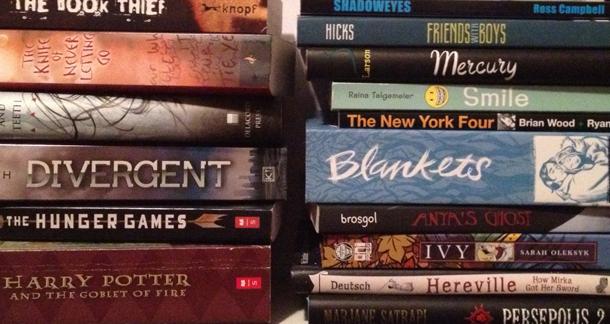
Don't even get me started as to why these people consider Harry Potter young adult fiction. Just goes to show what a lot of people know. Fun fact: Catcher in the Rye, The Great Gatsby, and other beloved classics were published for the young adult audience. I mean, Jane Austen was pretty much considered a women's fiction writer and she wrote some of the most analytical and true-to-life stories of English society in that age. So why is it that these radically successful trilogies like Divergent are still being blasted as simple stories with a love triangle and hot boys and whatever else? Well, like all stereotypes, part of them are true. There are a lot of stories with love triangles - it's a simple plot device that takes up some time in the novel while other things occur to give different readers different focal points. It also taps into the more realistic fiction market, because most realistic fiction offers very simple plot devices built up with writer finesse, and YA has a very wide range of reading abilities, intelligences, and ages. Some YA readers simply aren't ready for something more complex. I've yet to see a twelve-year-old read a Joyce novel.

But there's also the stereotypes bleeding in from other areas. Who, predominantly, reads young adult fiction? Teenagers, for one. Already considered to be a 'good-for-nothing' age group consisting of rebels and Molotov cocktails of hormones, this time in a person's life is considered to be unsubstantial by adult standards. And furthermore, who of teenagers reads more often than any other group? Girls. Teenage girls. And the societal expectation of the teenage girl is clear - a boy band-swooning, vapid, materialistic Barbie doll. Not meant to really have big ideas, strong thoughts, or be interested in 'deep' topics. Can you tell these words are dripping with disdain? It's true, I'm a tad bitter about that one, because I was held to that standard. The reason that YA fiction is written off is because the people who read it are written off. That's why written-off characters like Tris are so easy to identify with, a good proportion of YA readers have been there, or are still there.

Does this mean that we can't change the perception of various genres? Of course not. The way to do it is with purchasing power. It's no coincidence that dystopian novels and trilogies are exploding, or that female protagonists are parts of very popular series. Teenagers want to read about the world going on around them, and for a lot of people, dystopians are the closest thing to reality. Teenage guy readers aren't swayed by gender like people want to think they are, and they're looking for stories. Everyone, everywhere is looking for a good story. The only problem is that stereotypes like we have deter some readers from picking up a book. There have been studies where 'girly' covers are glossed over by guys. We have to push back and fight for the stories to define their genre instead of society doing it for them. We can do this.


Clickies:

@themoorewriter talks #YAlit and why judging a book by its cover can hurt an entire industry [Tweet it!]

Underdogs make for the best stories because stories are read by underdogs: @themoorewriter on nixing genre stereotypes  [Tweet it!]

Viva,
Brie

Thursday, July 31, 2014

My Thoughts Thursday: Who Am I?

24601.


With a friendly wave the the Les Miserables fandom, this is what we're talking today: figuring out who the heck you are. Because not only do you need to know about the deep, dark parts of your characters, you need to know those parts of yourself. And this isn't some sort of post championing myself as master of this topic - because I'm not and hopefully I never do that because I'm not the master of anything - this is more of a 'this will help you' blog post, because people who know themselves naturally know their characters better. Whether you're like me and you take pieces of yourself to create others or you find archetypes and embellish them to your liking, or whatever you do, knowing yourself can only help you.

Like we were talking Tuesday, it's important for transformations to include cognitive change - whether that's emotional, intellectual, or the actual growing of your brain. The thing is, writing with experience makes it easier in abstract cases like these. There's no way to tell that someone is changing or that their brain is growing (unless you're into lobotomy - I'm not) except for thoughts, which you can't illustrate, and actions, which come from thoughts. The whole 'write what you know' thing isn't quite true with concrete concepts, like knife-throwing, being shot, or talking to animals, whatever your genre. But in the case of something that you can't see, it's a little tougher and at least for me, it's easier saying it after you've done it.

A lot of books - especially in the YA genre - are about figuring out who you are. And a lot of who you are lies in what you think. And there's really no set way to get to know yourself to figure out what you're thinking, it's a personal journey that is unique for everyone and explored through different avenues for everyone. Writing has been part of mine, as has my other experiences. I have friends who have gone to camps or conferences and come back being changed. Part of finding yourself is having experiences that challenge you and force you to look at yourself in a different light. This may seem like a very general and vague post, but that's because it is. This whole 'who am I' business is a journey to Mordor of one. You're Frodo, and you don't get a Sam to go with you. But don't fret - you have your fellowship around, you can have support. You just have to do the heavy lifting on your own.

What are your thoughts? Got any experiences that truly changed you? Get any inspiration with an experience that really helped her character? Let me know!

Looking into the Pensieve,
Brie


Thursday, July 24, 2014

My Thoughts Thursday: The New Age

This whole thought train started with a conversation I had with my mother a few days ago. I asked her about country clubs, since she and my father had recently been to a work party at one. Every time that I'm in one or one of my parents is, they begin to talk about how they aren't what the used to be. My question was, why not? My mother told me that it got to be too expensive, and people in my generation weren't looking to join. They became less and less exclusive to continue earning money.

That's actually quite a trend between her generation and mine, not being alike. People my age are, studies show, less materialistic and less concerned about physical wealth. And we're not spending or investing, we're saving. We grew up in a recession and have been surrounded constantly by information with the dawn of computers, the internet, and social media. We are expected to be reachable instantly because of our smartphones that not only call and receive messages like their ancestors, but also browse the internet, play music, download files, post to Instagram, hold data, and run a touch interface. And while every generation is different from the one before, we have quite a bit different from those who raised us.

It's one of the reasons it's pretty evident when there's a young adult author writing that's from my mother's generation. The values of the characters are different and their pursuits go to ends that we don't always recognize as viable. It's like when I go to watch Jonny Quest, one of my favorite cartoons. It was created and aired during the late 1960s and early 1970s, when my parents were kids watching these kinds of things. I love them because of their hope for the future in cases of scientific advance, the subtly sinister villains, and the campy sound effects. But what differs so much of from the cartoons of the 1990s and early 2000s that I watched as a kid is that the plots are simpler. The women are portrayed as women 'should be' - helpful plot catalysts or attractive one-episode crushes for any of the male characters. And most of the villains were Russian, because at that time the United States and Russia were in the midst of the Cold War.

My generation is not the 'Me' generation that many newspapers claim it to be. We are the largest generation, outnumbering all others still living, and we work the most and the hardest. We're also paid the least, and are the most in debt from our student loans. We network better and are more politically and socially active than our ancestors due to our increased connectivity on the internet. And the question now is, of course, why does this matter?

Well, according to American sociologist Kathleen Shaputis, we've delayed passage into adulthood so much we've created a new phase of aging - 'emerging adulthood'. Basically, we've been so affected by economic pressures and by seeing the mistakes of the generations before us that we wait longer than any other generation to make traditional rites of passage into adulthood. So things like buying a house, getting married, and having kids are being pushed back because we can't afford it, and when we can we want to do it right the first time. We're also more likely to be skeptical of religion, more liberal, and more open-minded. That means that young adult characters, especially being written right now, should have those traits to reflect the audience.

I remember when I was a kid reading The Shadow Children series by Margaret Peterson Haddix - my first true dive into dystopia. I loved it, but I couldn't wrap my head around a bunch of sixteen-year-olds protesting the government. But today? I've seen it. Protests for gay marriage, protests against the U.S. support of Israel, pro-Palestinian movements, you name it. That's one of the reasons dystopia is so popular right now, besides the fact that world seems to be falling apart. Now, more than ever, the young up-and-coming generation is ready to fight back for whatever we believe in. None of this 'good-for-nothing kids' nonsense. We're creators, protesters, petitioners, agitators. We don't take the status quo as fact, we create it in the image we want. But with this whole set of strengths comes new problems - mostly financial right now, but what about later? This whole change in generational perception allows for new plot arcs, new stories, new conflicts. And like our perspective, our literature has to change to reflect our new values and our new struggles. No more stories like Gatsby about trying to get into higher classes. Nowadays, we don't want that. We want closer relationships, we want justice, we want different experiences than sitting in a country club while a struggling college student shines our golf balls. When the target demographic changes, so must we, the writers.

What do you think? Have any other interesting trends you see in the new generation that concern you? Let me know in the comments below!

Hoping to make this generation look good in the history books,
Brie

Thursday, June 26, 2014

My Thoughts Thursday: Walk That Line

I really do apologize for posting three things today to catch up, dear followers, but I've been sitting on these ideas for quite some time now. Part of it is the fact that I'm very interested in politics and the human rights of people around me (hence my genres!), and another is just the infuriating fact that we as a species love to either stick our heads in the sand or sit in lawn chairs and complain about what's happening, yet never actually do anything about it.

The other part of it is that I'm on tumblr and that's a very big focus in the lit blogs I follow. There's actually a large part of tumblr, regardless of type of blog, that have noticed the serious lack of sexual, racial, religious, and gender variety. They champion the Bechdel test and note how many non-white faces they see in movies. As a generation, we notice. But here comes the problem with all of that. When you try to represent, that's great. But what happens when you go a little overboard?

You get what I like to call Textbook Syndrome. Does 'Lashawna, Mike, Qian, and Pablo all have seven watermelons' sound familiar? It makes the diversity and representation fake. As much as 'stay with your own kind' seems fake, sticking with everyone of every subset is just as bad. Not everyone needs to be a transgender pansexual half-Indian half-Chinese person. But to err on either side, to be so diverse it's obvious or so whitewashed it's appalling, is just as bad.

I see this quite often on tumblr where users tend to fly off the handle towards the underrepresented. I mean, there's even this post going around saying that in the Disney movie Frozen, which has caused both controversy over supposed 'whitewashing' and acclaim for allowing a mainstream, successful movie to not depend on the prince-saving-the-princess plot scheme, Elsa should be a lesbian, and that her lover should be an African Muslim who controls fire.

As nice as this sounds, this completely disregards the Muslim religion entirely. For the faithful, it's stated quite clearly that same-gender sexual relations are sin. This is an example of non-Muslims pushing this image just to represent a racial and sexual minority while not actually thinking of whether or not these combinations can exist. It's what I like to call pandering, trying to represent without respect.

So I guess this MTT's theme is simple: in life, you will meet people who are unlike you. Different experiences, genders, religions, sexualities, and races. But recognize in our shows, stories, and movies, that there is a difference between no representation, representation, and too much. Like many things, our living conditions, for example, there needs to be a balance.

Walking the tightrope,
Brie

Thursday, March 6, 2014

My Thoughts Thursday: The P Word

It's been quite the week. Generally I have some sort of post for Thursday where I'm serving up literary snark, but I'm too tired even for that. Sometimes, life rolls on. Other times, life steamrolls on. Over you. This is one of those other times.

A lot of people think that after Christmas break, life's a breeze. But since these people have left school, various school boards, states, and federal whims have brought us more testing, more homework, more diagnostics, and other behavioral corrections enough to make a lab rat out of me. I am nothing but five letters meant to make the school board look good, it seems.

The good news is, the weekend is almost here, and the week of OGTs is next, meaning I have two hours off school each day while the sophomores take graduation tests. I think...I THINK that I can finish The Artist next week.

Fingers crossed, writing gods appeased, lucky shirt worn.

So I guess my thoughts this Thursday are summed up on one word: Persistence. Perseverance can work, but you need tenacity, endurance. Push through, and you'll get what you want. Let's hope we all accomplish that soon, huh?

Don't forget the brain bucket,
Brie

Thursday, February 27, 2014

My Thoughts Thursday: Neuroses.

I said it Tuesday, I'll say it again: I love it when writing is like real life. There's awkwardness, people speak like they normally do, there are people of different races, ethnicities, and cultures, sexualities. The world is a beautiful, complex, random cosmos inside our enormous universe.

Characters are my babies. I love them. They're one of my favorite portions of a book or a piece of literature besides writer's craft. How else do you get another person's thoughts, feelings, dreams, and ideas into your head? You never see someone else's perspectives like you do when you read a book. You go through life with really only your perspective of the way the world turns, hearing about others' but not really living them. This is one of the reasons that books have endured for centuries, they do things for us that nothing else can.

But back to characters.

Giving characters 'quirks' is always a goal for a writer, because that makes them stand out. There are literally millions of characters who have brown hair, blue eyes, pale skin, or who are strong or smart or a jock with a soft side or a badass with a sad backstory. How are these characters to ever find a way to stand out from the others? By their own little neuroses, that's how. Maybe a love interest hates being cliche and always shows affection in the strangest ways possible so as to be 'original', or one always night showers or walks in the early morning outside to be by themselves. It's the little tidbits that aren't relevant to the plot that make them breathe.

Finding out things about a character depend on how you meet your characters. For me, it's almost like I run into them on the street as I'm out doing whatever I'm doing, where they look a certain way, speak a certain way, and have a name before they introduce me. I'm not scrambling to build them like in a Sims game, like some authors. They come as they already are, and so for me finding their little quirks is about getting to know them. Some authors need to carefully plot out each hair on their protagonist's head, but that's not me. We're a varied breed, writers.

The problem with these quirks are the balance of them. Too much, and your character is suddenly a manic pixie dream girl (or boy) that seems to not be able to hold a conversation or live conventionally due to his or her neuroses. Too little, and they appear contrived, deliberate, pretentious...like they're trying too hard to seem normal. Let their humor sneak into dialogue for the sake of them speaking, have someone trip up their need to color-code their closet and see what happens. Not every piece of a character is relevant to propelling the plot forward. Not every detail of our lives comes into play significantly. If it were true, we wouldn't be characters or people: we'd be puppets, doing what entertains our puppet master and disregarding free will. Which I'd hate for that to happen.

I'll keep this brief, because my last couple were super long. But moral of the story, characters are fictional humans (or whatever they're meant to be). We can make them as perfect and neat as we'd like, but they're boring that way. Give a girl frizzy hair. Give a guy an inability to mismatch his socks. Make them laugh, cry, smile, crack jokes because they are people and need air and want to be known. Let them come alive, and readers will go nuts. And maybe, just maybe, you can bring us one step closer to the world on the page.

Meet-and-greets and tea parties with fictional characters,
Brie

Thursday, February 13, 2014

My Thoughts Thursday: New Writers

Starting out on the road to being a writer is kind of like high school: you go through awkward phases, you're embarrassed about the things you did a year, two years, or three years ago, and you try to avoid anyone in that dreaded 'freshman' area. For those of us who have been exposed to the writing life for long enough to consider ourselves upperclassmen, a lot of us shirk and downright abuse those freshmen, the 'new writers'.


I myself have never been one for cutting down a tree because it hasn't grown yet. In the words of one of my favorite Disney princesses, 'How high does the sycamore grow? If you cut it down, then you'll never know.' (Pocahontas, if you were wondering).

What people seem to neglect to tell you about writing, whether it's prose, poetry, or editorial, is that you're going to majorly, majorly suck at first. All new writers do. There's none of this 'hit the ground running' shtick that can happen in academia or athletics due to talent. You may have all the talent in the world. You will still suck when you start, it's just the way it is. J.K. Rowling sucked, Steven King sucked, Shakespeare sucked, everyone was atrocious at one point. But what separates that 'suck pit' from the road to awesomeness in whatever your medium is is what tells you that you suck: your instinct. You already have great taste in your genre, but when you look at your stuff, it's just not great. And that's how it'll be for a little, but that instinct is what will pull you through.

So as much as new writers have to learn about craft, grammar, and worldbuilding, I think us veterans have something to learn from the frosh of the writing world. In a list, complete with appropriate gifs: 
Five Things Experienced Writers Can Learn From Newbies.

1. You wrote because you wanted to.


Sure, the whole dream of being published, amassing a militant fandom and taking over the film industry with your epic writing of unbearable awesome sounds great. It does. But no one writes for that. That dream isn't realistic enough for anyone to write for the sake of the fame. (Did I say fame? What fame? Writers don't get fame.) Whenever someone writes, they pick up their pencil, laptop, or whatever mode of writing because they want to tell a story, and they want to share something with others. Poets don't open their ribcages to let the bad things pour onto the page in beautiful lines because they want prestige. But the thing about young writers is that they don't know anything else. They want to write badly. They want to be good, great, super awesome, and a lot of us vets sometimes lose sight of why we even started this blasted business in the first place. I know I sure have. Whether you do it because you can't live without it or just need a way to express your thoughts, new writers remind us that we're all here because at one point, we wanted to be. Thanks, newbs.

2. Enthusiasm writes better than derision.


Truer words have never been spoken. As someone who's been seriously writing for three years now (and writing for ten) I will be the first to tell you that there are days where you look at your work and you just think, 'no'. You don't want to work on it, you don't want to look at it, you don't want it to be there. But you do it because you need it done. And then when you go back, you hate what you wrote. New writers haven't hit that wall yet, they're like toddlers on caffeine. They run with their ideas and write everything they can about it because they want that idea to be real and they want their story read. And if they don't want to write that day? They don't, plain and simple. They're not feeling it. We could definitely take a page from them and get back in touch with our inner crazy writers.

3. There's no such thing as dignity.


I love that chicken. But it's true, and something that people who have been writing for awhile need to get through their (at times) thick heads: we're all in this together. Asking for editing help, using people as soundboards, querying shamelessly, promoting yourself like a street walker on saint's day, whatever. We're all just trying to get our foot in the door, trying to stand out, trying to reach that dream of seeing your idea in real hardcover. Ask for help, take criticism, look at your work honestly. New writers are unabashed when it comes to asking questions. They want to know everything there is to know about anything there is about writing. As a veteran, you like knowing, and looking like you know. But we all know that isn't all true, huh?

4. You're never too veteran to make a mistake.


Ah, internet, you never fail to amaze me with your gif arsenal. But this one is especially important for veterans. Like I said, we all like thinking we know all there is to know about the industry, about craft, about writing, and about being writers. But we don't grow in our work if we don't make mistakes, and new writers are famous for unapologetically making mistakes. They fall, get up, brush themselves off, and run right back in to play. Like my man Callan McAuliffe here, they're taking that backward somersault like a champ. Vets get creaky and refuse to believe they're in the dirt, but they are. Come on, guys, we gotta let ourselves screw up. It's how life works, and taking it gracefully makes it all the easier to get back up.

5. There is hope.


Keep in mind that these new writers are the next generation of authors. Whether they all stay or not is up to them, but as veterans we have to have a good group to hand the reins off to when we all get too old and crusty to write anymore. It's like planting a tree. You won't sit under it, but your child might. Help out the newbies, give them a path to walk that will get them where they want to be, and just let them feel like a part of the group. We all know how the writing world is kind of outcast as it is, don't make it worse and cast out the outcasts from the bigger group of weirdos. I was a newbie once, we all were. If I hadn't had an older writer to grab me by the wrist and (somewhat aggressively) demand that I at least step on this path, I wouldn't be blogging, writing a trilogy, or really doing much of anything with my life. So I have her to thank for that, and it's my responsibility to do that with others, too.

And a final word to any new writers I may be reaching:

Gif frenzy and bold overload,
Brie