Showing posts with label writing. Show all posts

Tuesday, November 18, 2014

Think Tank Tuesdays: What Do You Think?

This has been on my mind for quite some time now, especially now that I'm part of a 15,000 person nation, essentially, where this tends to be a very visible difference between people. Changes of perspective come in different forms. Visiting another country, getting a new experience, becoming politically active, going to college. In fact, just today when I was studying with a friend I was given an 'awareness' survey and asked various questions about on-campus and off-campus happenings. The girls who gave me that survey probably regretted it, because I elaborated on every non-multiple-choice question. But then again, if you're going to ask me about American history and what America has learned from it, sit back and make yourself comfortable because I will talk about it for at least ten minutes.

One of the very vital parts of a person, the part that differentiates one from another, is ideology. What another person thinks, their perspective of how the world works, and how they plan to do in that world are very individual. This part of a person is one of the most important factors in characterization, as well. Why? Someone with no drive and no sense of how the world works is either a badly done character no one will root for or connect to, or they're not long for this world. Diverging ideologies separate hero from villain, families from each other, or even individual people from others.

Take, for example, Anthem by Ayn Rand. Prometheus's diverging ideology that being just like everyone else is a waste of human potential separated him from everyone but his lover, Gaea. He's the hero of the story because his ideology is different. To go a little more contemporary, the ideological difference between the Order of the Phoenix and the Death Eaters shouldn't even need explaining. Magical genocide versus inclusion and support? Are you kidding?


I've been chugging my way through my second draft of TA, and I've noticed that as I write the characters again, they're becoming more distinct. Not because I've decided that Oliver suddenly has freckles or that Collins now seems to have more of a law-abiding nature, but because I've delved into their ideologies. Ideology stems from your background and experiences along with your knowledge, and the more you learn about a character's past the more their ideology stands out. There's always the flat, isolationist 'if it doesn't benefit me, I'm not doing it'. Yawn. That's always part of an isolationist ideology, but it's not very interesting. In fact, it's the basis of just about every 'edgy' character you can find in literature.

Instead of something simple, complexity is important. Take, for example, Collins, my protagonist. She's grown up in impoverished conditions, relying on her brothers to take care of her and feeling responsible to pay it back in spades. Her ideology is shaped by the way she was raised and the experiences she had - be more open to taking care of the family first, if people approach you then they definitely want something, decisions made always need to be made with family in mind, with work and security in mind. This thought process differentiates her from the artists, especially Oliver. Having lived in relative comfort and security most of their lives, their ideologies are varied, but a serious divergence from hers. I mean, the reason they meet is because of Oliver's ideology: Do what you love, make time for what's important, take care of the artists, fly below the radar, but say what needs saying. Collins wasn't going to seek him out, he had to have the mindset to find her.

And I think that this lacks in literature in general. Especially now that I'm in writing classes (for real, not just an English class creative assignment that allows anything with good grammatical structure), and I'm reading about many different protagonists experiencing many different events, reacting to them in many different ways. If you're looking for a great example of divergent ideologies and how that changes characters, I highly recommend the graphic novel Watchmen. It's a masterpiece (won a Hugo award, you know. No graphic novel has done that) and with the format it's very easy to see the differences in thought and how that makes a person act.

Hey, I just made two posts in a row, go me! Stay tuned for more posts on depth, and stay warm, dear followers. I just had my first snow of the year, and it's nineteen Fahrenheit.

Hot cocoa and political discourse,
Brie

Monday, October 6, 2014

Maniacal Mondays: My Conversion to Easy Mac

Hello, everyone.

The last post on this blog was over a month ago, August 27th. I was still reeling over the fumes of the first week of classes, joining clubs like it was going out of style, and trying to meet people. This whole period of freshman year is wonderful, but when it's over, it hits you like a truck.

It hit me like a truck that was full of bricks. I went down, hard.

My departure from the honeymoon phase of Welcome Week wasn't really noticed in my classes - I turned in assignments, got good grades on papers, whathaveyou, but personally my life was falling apart. I had no time to be social, I was constantly doing homework, staying up late. I hadn't written in two months, The Artist sat in it's finished form untouched, unedited, unseen. I was having trouble concentrating on my work and my studying because characters would fly into my head like neglected baby birds. It was a dark time.

But now, I think I have a handle on things. I'm writing for English now instead of just reading, so that's a wonderful outlet, and when I can I slip some things into either book two or I go back and see what to do with The Artist. I literally had a talk with my first year advisor, also a writer, who pretty much freaked out when I told her what was happening. She ordered me to make time to write, and it has been absolutely wonderful. I feel so much better.

Anyway, college is getting cooler now, I can finally wear pants (and not shave...sorry, boys), my scarves from Spain, and not come back to the dorm covered in sweat. And I have discovered the joy of collegiate life that is Easy Mac. Seriously, within three minutes you too can have melty, cheesy, ultimate-comfort-food goodness in a little handheld bowl. Pro tip, though: use that Parmesan cheese powder stuff and mix it in. It adds just another cheesy element and makes your belly happy. These can be found in any dining hall, or at any grocery store for dirt cheap in nice shaky containers.

On a final note, one of the best parts of being a writer in college? The people watching is utterly spectacular. Where else can you find people in droves walking dimly lit sidewalks in togas, American flag garb, or see someone play bumper cars with their body and the cars parked on the street? Ah, college. A writer's paradise, except that whole thing about socializing. Whoops.

I'm going to be doing my best to start queuing up posts for this week early, as I'm currently writing this on a Wednesday. Maybe I'll get really lucky and be able to do a week of postings! I hope you've all been doing well since I've been gone, and have a great week!

Easy Mac and Goldfish,
Brie

Monday, August 11, 2014

Maniacal Monday: I Think I'll Go to Boston

If you didn't honestly think the second our car passed the Boston city limits I didn't start singing that song, then you don't know me very well. In fact, I texted the lyrics in all caps at various people who would accept my weirdness with an idiot smile on my face. As you may have seen on my twitter feed, I've been on hiatus for this past week as I spent a week with my aunt and uncle up in New England. Not only was this a great trip for me to see how people live in various states in my country (because contrary to popular belief, each state has it's own identity and way of life), but it was wonderful for research. The people-watching in New York City was spectacular, and my only complaint was that the New York Public Library wasn't open for me to wander into like a child into a four-story candy store. The amount of sheer humanity there was ridiculous, and I learned to play chicken in the sidewalks instead of weaving my way between people like I would normally do in the city. NO, SMARTLY DRESSED ASIAN MEN. YOU ARE IN MY WAY.


Anyway. We also took a trip to Maine, which I honestly believe I could live in if the winter wasn't so horrifically cold and snowy. The food is amazing, everyone is kind, and the colors are wonderful. I'm not even really a visual person, but you can't deny a certain pleasure in watching a storm come in over the ocean and seeing every color of blue you can imagine and several that you couldn't wave over you as you stare through your car window and snap pictures. This week was great for me to unwind from freaking out over school, where I move in eight days. I also learned the art of the bun hair, and have found that I, in fact, really like my hair up. It's become my hardcore writing hairstyle, as I don't even need to bother with the ponytail or wispy hairs in my face while I'm entrenched in the other world.


Boston, however, was my most favorite place of the three. The perfect mix for me of Maine's colors and New York City's opportunities and industry, I had a wonderful time on the waterfront, walking the Freedom Trail (the Old North Church, Paul Revere's House, etc.), and hanging around Little Italy, which completely surrounds many of the Revolution-era historic buildings. I find it wonderful because we're talking about powdered-wig British colonists and you walk outside and there are festival banners for the Feast of Madonna Della Cava right outside Paul Revere's house. The vivacity of the city was incredible. Unfortunately, I don't have a picture for you, as I took all of them with my camera and I haven't unpacked yet.

But I'm back and better than ever this week, ready to start some new postings and finally finish that review of Not a Drop to Drink by Mindy McGinnis. Is this my super-casual and totally clever way of promoing this book? Take that as you'd like. It should be up this week, though, since I find myself with a couple days off and I actually have my laptop again. I've missed you, lappy. I love you.

I hope you all had a wonderful time while I was on break, and thank you to my new readership, my blog post reads have soared over the week that I was gone! It was a great 'welcome back' present from you guys!

Unpacking and unwinding,
Brie

Tuesday, July 29, 2014

Think Tank Tuesday: Us Against the World


Change has always been part of our lives. When we were younger, we watched the seasons change (or watched the weather change every ten minutes if you live in Ohio like I do), and we saw ourselves change as we grew. We got legs we didn't know what to do with, weight gain we didn't know how to handle, and social change that we weren't quite sure how to navigate. But these changes didn't just happen out of the blue like it appeared to us that we did. The whole 'thing' about change is that it is catalyzed - something happens that makes us change. In the case of our bodies, hormone signals tell various body parts to develop, mature, or sometimes come about at all. Socially, environmentally, though, something happens to us that we understand. When the weather gets chilly and the sun hides away, we feel less happy, more tired and stressed. If someone argues with you and you avoid them for a few days, that social change was started by that fight.

The thing is, in young adult fiction, change is necessary. Part of the gig of being a young adult (or any sort of human being, really, but especially at this age range) is that you are constantly changing. Physically, emotionally, cognitively, socially. You go through a period where you are not the same person you were an hour ago, and considering your earlier years of mostly stasis (staying the same), this is pretty freaking scary. You can't exactly tell who you are, much less tell others who you are. Yet it seems to me that in YA literature, especially popular literature, everyone has themselves figured out, it's the external changes they have to navigate. I mean, there are some people who go through the changes early and get at a more stable existence in their late teens, but at sixteen years old pretty much everyone is a Molotov cocktail of hormones, decisions both good and bad, and short-term aspirations. It's why so much realistic fiction lies in getting a significant other or getting a former lover back. These are short-term goals that require a little change but that are very easy to accomplish in the grand scheme of things. It's easier to get a boyfriend than it is to change the world, just ask Tris Prior, Katniss Everdeen, or Harry Potter (girlfriend in this case, but he had the hardest time of the three of them. Poor awkward little nugget.)

So we've covered the fact that change is the only reason books are written or that people encounter different scenarios, but what about characters? Half of the whole book (or more if you're into classics like Portrait of the Artist as a Young Man) is about the character becoming a different person. There's even a term for a book that talks about coming of age: bildungsroman. Not exactly the prettiest name, but there are so many books that explore the young adult age range and how people change during that time they have their own term. And if you've seen a Joyce book, his bildungsromans are thicker than my arm. The elements of change a person experiences during their time as a preteen and adolescent are so complex people write whole books about it. So why don't we have that in young adult literature as a minor element? People change, of course, but is that it? Someone becomes more compassionate, another learns about loss, but there's no way that's all the changing they do. Look around, check out books filed under 'bildungsroman' or 'coming of age'. Embrace the fact that characters at this age are changing drastically, just as we are. Does that mean they can't save the world? No, but to write them like an adult and focus mostly on how their decisions change based on experience is to shut out a beautiful and extensive part of what it means to be a teenager. We are still changing, forever and always. Maybe it's about time we stopped pretending like we don't.

Still changing too,
Brie

Thursday, July 24, 2014

My Thoughts Thursday: The New Age

This whole thought train started with a conversation I had with my mother a few days ago. I asked her about country clubs, since she and my father had recently been to a work party at one. Every time that I'm in one or one of my parents is, they begin to talk about how they aren't what the used to be. My question was, why not? My mother told me that it got to be too expensive, and people in my generation weren't looking to join. They became less and less exclusive to continue earning money.

That's actually quite a trend between her generation and mine, not being alike. People my age are, studies show, less materialistic and less concerned about physical wealth. And we're not spending or investing, we're saving. We grew up in a recession and have been surrounded constantly by information with the dawn of computers, the internet, and social media. We are expected to be reachable instantly because of our smartphones that not only call and receive messages like their ancestors, but also browse the internet, play music, download files, post to Instagram, hold data, and run a touch interface. And while every generation is different from the one before, we have quite a bit different from those who raised us.

It's one of the reasons it's pretty evident when there's a young adult author writing that's from my mother's generation. The values of the characters are different and their pursuits go to ends that we don't always recognize as viable. It's like when I go to watch Jonny Quest, one of my favorite cartoons. It was created and aired during the late 1960s and early 1970s, when my parents were kids watching these kinds of things. I love them because of their hope for the future in cases of scientific advance, the subtly sinister villains, and the campy sound effects. But what differs so much of from the cartoons of the 1990s and early 2000s that I watched as a kid is that the plots are simpler. The women are portrayed as women 'should be' - helpful plot catalysts or attractive one-episode crushes for any of the male characters. And most of the villains were Russian, because at that time the United States and Russia were in the midst of the Cold War.

My generation is not the 'Me' generation that many newspapers claim it to be. We are the largest generation, outnumbering all others still living, and we work the most and the hardest. We're also paid the least, and are the most in debt from our student loans. We network better and are more politically and socially active than our ancestors due to our increased connectivity on the internet. And the question now is, of course, why does this matter?

Well, according to American sociologist Kathleen Shaputis, we've delayed passage into adulthood so much we've created a new phase of aging - 'emerging adulthood'. Basically, we've been so affected by economic pressures and by seeing the mistakes of the generations before us that we wait longer than any other generation to make traditional rites of passage into adulthood. So things like buying a house, getting married, and having kids are being pushed back because we can't afford it, and when we can we want to do it right the first time. We're also more likely to be skeptical of religion, more liberal, and more open-minded. That means that young adult characters, especially being written right now, should have those traits to reflect the audience.

I remember when I was a kid reading The Shadow Children series by Margaret Peterson Haddix - my first true dive into dystopia. I loved it, but I couldn't wrap my head around a bunch of sixteen-year-olds protesting the government. But today? I've seen it. Protests for gay marriage, protests against the U.S. support of Israel, pro-Palestinian movements, you name it. That's one of the reasons dystopia is so popular right now, besides the fact that world seems to be falling apart. Now, more than ever, the young up-and-coming generation is ready to fight back for whatever we believe in. None of this 'good-for-nothing kids' nonsense. We're creators, protesters, petitioners, agitators. We don't take the status quo as fact, we create it in the image we want. But with this whole set of strengths comes new problems - mostly financial right now, but what about later? This whole change in generational perception allows for new plot arcs, new stories, new conflicts. And like our perspective, our literature has to change to reflect our new values and our new struggles. No more stories like Gatsby about trying to get into higher classes. Nowadays, we don't want that. We want closer relationships, we want justice, we want different experiences than sitting in a country club while a struggling college student shines our golf balls. When the target demographic changes, so must we, the writers.

What do you think? Have any other interesting trends you see in the new generation that concern you? Let me know in the comments below!

Hoping to make this generation look good in the history books,
Brie

Wednesday, July 23, 2014

Witty Wednesdays: Put On Your Sweatband

Today was originally going to be a review post in which I review Not a Drop to Drink by Mindy McGinnis, but that's been moved to Friday because I feel that Wednesdays by default are the days in which you need much more motivation than the rest of the week - hence the sweatband reference.

I know that my last Witty Wednesday post was less than witty, considering its focus on religion, but I hope that today's is a little more light-hearted. As you may know, I am nearing the finish line on my first draft of The Artist (finally) and have been pushing the last two days to get it done. What you may not know is that I had a full day yesterday and spent at least half the time I spent writing trying to motivate myself to getting back to doing so. I mean, the Law of Inertia does have something right: objects in motion tend to stay in motion. Once I sit down to it and get my fingers going, it's easy to crank out a huge chunk of writing. Unfortunately, when you're a college freshman like myself that still has to buy dorm materials and you still live with your twin brother and parents there's really no way to just have several hours to yourself for writing.

So how do you keep yourself going even though there's a delicious chicken avocado quesadilla calling your name from the fridge or a twittersphere updating at the speed of light on the phone perched at your side? I got you.

1. Remove All Distractions


I know I've used this GIF before, but come on, seriously? It's perfect and goes with everything. But back to the tab at hand, don't give yourself an exit if you can. You'll know it's there, and the second something gets hard the overwhelming desire to abort mission and do something else is hard to fight. Eat before you sit down or graze as you go so that you're not forced to sate your grumbling stomach halfway through a scene that's going great. Keep your phone out of easy reach so that it's more of a chore to check it or go on twitter or my new vice, Houzz (like Pinterest but for pretty houses). Have a blanket and water nearby. If you have research or other notes, nest it around you. I do this for school work, too. I literally surround myself with what I need to do so it discourages me from getting up and lying on the floor in front of the TV or sleeping.

2. Start Your Jam


Some people need music, some people can't stand it when they write with noise. Either way, get into your jam. If it's silence, close doors, open shutters but not the windows, and find a way to sit so that you cause minimal noise. Also with the eating thing, because stomach noises are the most annoying, especially when you hate noise. If you need some tunes to go along with your writing prowess, either create a playlist before you get your things together or play one on repeat. That way you're not stopping every so often when some random song that breaks the mood comes on and you have to change it. Whatever inspires you for a particular project works, but don't be throwing brand-spanking-new songs in there. The point is that you're only half-listening and really working. New songs you're relatively unfamiliar with pull you out of your writing because you're busy listening to them. I personally have Spotify lists and iTunes playlists for pretty much anything I need ever, so I don't have to listen to the same thing into oblivion. Apparently that method of mine has received recognition throughout the house. Oops.

3. Reward Yourself


Writing is hard work. Slightly like the Hobbits' journey to the fiery death that was Mount Doom, it requires going on when you don't want to and running from various creatures out to stop your mission. Theirs were Orcs and Ring Wraiths, yours are procrastination and fatigue. But even the Hobbits got some down time. Nothing can sustain working all the time - I learned that with my laptop battery and now turn my laptop off religiously - so don't freak out if you can't keep going for hours upon hours. Sometimes you can, and sometimes you can't. Build in some good time for yourself to go and do something else for awhile and let your brain relax. Read a book you have near you, maybe just sit back and listen to music, or take a quick walk. I'd say make them mini-rewards so that you're not away from your work too long, but sometimes a forty-five minute lesson on how to longboard is just what the doctor ordered. The road rash from learning wasn't so much part of the plan.

These may seem like really obvious steps, but the thing is, we don't always do what is good for us. Sometimes I watch two hours of TV because I've missed Perception for a couple weeks. Other times I eat full sleeves of Double Stuf Oreos. It's just part of being human. But if we just keep these steps in mind every time we sit down, there's going to be a better chance of someone getting something done than if you just flop down and try and crank out the next great masterpiece. Make it a habit, make it a routine, make it something that helps you achieve success. Now, if you'll excuse me, I have a first draft to finish.

Climbing Mount Doom with the Ring of Power,
Brie

Tuesday, July 22, 2014

Think Tank Tuesdays: The Muse

I read a really interesting article on tumblr the other day about a psychological study that was conducted at the Iowa Young Writers program - a program similar to the Kenyon Review Young Writers program but a plane flight for me instead of a short car ride. Basically, the point was that the stereotype that writers are moping wallflowers is wrong, and it was proven by young writers including Kurt Vonnegut.

Basically, the way a person's mind works when it comes to mood is that there is eurythmia (the sort of baseline, feeling normal) and mania or depression, where the balance of your mood escalates to either a high (mania) or a low (depression). You'd think that all the writers waited until depression or mania struck to write, right?

Wrong. In fact, it was found that during periods of mania or depression it was impossible for the writers to find inspiration or write. It wasn't until after they were back in their normal flow, their eurythmia, that they could write. However, when the writers were in a normal mood state, they could reflect on their periods of depression or mania without being attached to them personally, being able to perfectly describe these periods without the effects returning to them.

I think it's really interesting, but also unsurprising. Writers are generally thought of as brooding or otherwise not sunny, happy creatures frolicking in meadows. (What I do in my spare time is not yours to judge, okay?) But the reason this is isn't because everyone knows a writer that sits in corners with their tea and stares listlessly out the window, it's because the literature describing depression and how it feels and acts on a human being is so vivid. I mean, writers are supposed to be able to make a reader feel how we want them to feel using description, so this comes as no surprise.

What's the point of this entire thing, you ask? Am I attempting to start a support group for depressed writers? Of course not. What I'm trying to say is, writing isn't all about the craft in your words or your character arcs or your ability to cause emotional trauma with your deaths. Part of it is the technicality of it all. I mean, good runners don't eat two Big Macs and a large Coke and expect to run a good time on their five miles. As writers, it's up to us to make sure our machinery is working. And more than many other pursuits in this world, that requires that we take care of our brains. Obviously there's no real 'cure' for this roller coaster of emotion - it's a natural alteration of serotonin and other chemicals in your brain. But there are things that you can do to keep yourself inspired, focused, and ready to write. Eat right, exercise a little, get good sleep, those are pretty common. But don't forget to give yourself a little lovin' every so often.

Everyone is so stressed nowadays with work or school or whatever else that it's easy to drop into these high or low periods because they're so busy with everything else. But as a writer you have to maintain your brain machine. Watch your favorite show, make yourself some cookies, lie on the floor, people watch. Do whatever you need to make you happy. When you're running at full steam, so is your brain. Let out those lovely ideas and ground-shattering philosophies, and don't worry if it's not coming for a little while. Like the study shows, that's just natural. I know a lot of writers who are slaves to their work, and I think we could all take this lesson to heart (especially myself). When you're good, your writing is good. Simple as that.

Brain food and good sleep,
Brie

Tuesday, July 8, 2014

Think Tank Tuesdays: Real-life Horcruxes

This title definitely isn't related to the fact that yesterday I watched the entire TV special Harry Potter: The Making of Diagon Alley. And it definitely doesn't show how excited I am for that theme park when I haven't actually been to Disney World since Apple came out with an iPod Shuffle and Expedition: Everest was still a dusty lot.

I'm going to attempt a horrid segue here into our topic today, which actually does tie into the title of the post (thank goodness I got something right, huh?). I mentioned it a little yesterday about giving a piece of yourself to whatever you do, whether that's drawing, writing, cooking, or something else entirely. Like a significantly less murderous form of a horcrux, your work should house a little sliver of your soul. You can't create life out of nothing, something needs to be living first.

Characters are the easiest way to determine whether you've done this. If they jump off the page, they've been given life by their writer. And when that writer is you, you have quite the responsibility to your new people if you want them to end up like Harry, Ron, and Hermione, creating a fanbase or at the very least a loyal readership who adore your characters. Nothing's more of a sock to the gut than having someone comment on your Goodreads page, 'the characters were flat, I couldn't relate to them'. And the thing is, it's not an impossible feat to do this. It just requires a certain personal awareness.

And not everyone knows themselves best. I'm very fortunate to be what's called 'self-intelligent' according to the Gardener Multiple Intelligences test, meaning that I know myself and how I function very well. But the way to make good characters come alive comes from (in Voldemort-esque fashion) splitting a shard of your soul and sticking it in their chest.

That sounds pretty weird, right? But it's not. Take, for example, my protagonist from my current WIP, The Artist. This year I discovered that I'm kind of a Momma Bear, protecting those who I love and taking responsibility for them. I thought that would be an interesting trait for her to have, since I was having a hard time expressing her benevolence. But she seems so much more real now that she's constantly looking after everyone around her as opposed to random blips of kindness that appear in her actions. She's better for the little sliver of me that's in her. It's really great for your antagonists, as well, or characters that are antagonistic towards your protagonist. One of the antagonists that you meet in the first book of the WIP trilogy exhibits one of my flaws - my fear. I experience emotions very intensely, and fear is no exception. The way that fear paralyzes me and makes me completely paranoid got split off from me and sent into him, and that fear is part of his downfall.

Taking pieces of yourself and putting them inside characters doesn't hurt you, not like it hurt Voldemort in Harry Potter. Your soul is regenerative, you can split it off and stick it in however many characters as you please. But something that I think is wonderful about doing this is that, like with my antagonist, you can create themes in your works by doing this. My antagonist, unfortunately tagged with my ensnaring and petrifying fear, makes choices based on that paranoia and other emotions trying to compensate for that emotion - generally anger. But he falls. Not just because he's the antagonist, that's not real life. He falls because he is so wrapped up in his fears and what he thinks may happen that he makes several bad decisions in who to trust and what to do. It's a theme that I want to express to my readers and myself - fear cannot control you if you want to succeed. It's natural, and it will always be around, but you must learn to surmount it instead of allowing it to consume you as it consumes him.

So go on, try it! If you have existing characters, try and find bits and pieces of you in them. When creating your characters, don't be afraid to make a side of them in your image, even in the facets of your image you don't like. Writing is a very personal experience for this reason, because the writer literally sticks bits of themselves in the words. But those pieces of you are what your readers will latch onto and cherish. I know for a fact that there's a huge place in my heart for Hermione Granger, the young bookworm and brightest witch of her age. I was her, I was the nerdy little bookworm who excelled in school and feared failure. That connection has never been broken, and remains as strong as when I met her back in 2000. Don't your readers deserve that kind of connection to your characters? I think they do.

May your soul split easily,
Brie

Thursday, June 26, 2014

My Thoughts Thursday: Walk That Line

I really do apologize for posting three things today to catch up, dear followers, but I've been sitting on these ideas for quite some time now. Part of it is the fact that I'm very interested in politics and the human rights of people around me (hence my genres!), and another is just the infuriating fact that we as a species love to either stick our heads in the sand or sit in lawn chairs and complain about what's happening, yet never actually do anything about it.

The other part of it is that I'm on tumblr and that's a very big focus in the lit blogs I follow. There's actually a large part of tumblr, regardless of type of blog, that have noticed the serious lack of sexual, racial, religious, and gender variety. They champion the Bechdel test and note how many non-white faces they see in movies. As a generation, we notice. But here comes the problem with all of that. When you try to represent, that's great. But what happens when you go a little overboard?

You get what I like to call Textbook Syndrome. Does 'Lashawna, Mike, Qian, and Pablo all have seven watermelons' sound familiar? It makes the diversity and representation fake. As much as 'stay with your own kind' seems fake, sticking with everyone of every subset is just as bad. Not everyone needs to be a transgender pansexual half-Indian half-Chinese person. But to err on either side, to be so diverse it's obvious or so whitewashed it's appalling, is just as bad.

I see this quite often on tumblr where users tend to fly off the handle towards the underrepresented. I mean, there's even this post going around saying that in the Disney movie Frozen, which has caused both controversy over supposed 'whitewashing' and acclaim for allowing a mainstream, successful movie to not depend on the prince-saving-the-princess plot scheme, Elsa should be a lesbian, and that her lover should be an African Muslim who controls fire.

As nice as this sounds, this completely disregards the Muslim religion entirely. For the faithful, it's stated quite clearly that same-gender sexual relations are sin. This is an example of non-Muslims pushing this image just to represent a racial and sexual minority while not actually thinking of whether or not these combinations can exist. It's what I like to call pandering, trying to represent without respect.

So I guess this MTT's theme is simple: in life, you will meet people who are unlike you. Different experiences, genders, religions, sexualities, and races. But recognize in our shows, stories, and movies, that there is a difference between no representation, representation, and too much. Like many things, our living conditions, for example, there needs to be a balance.

Walking the tightrope,
Brie

Witty Wednesdays: Selfies with the Pope

Okay, so this first Wednesday post is pretty much because I have so much to talk about with this series about realism and the controversies that young adult literature seem to just want to leave alone. Race, sexuality, gender. If it isn't vaguely feminist or vaguely accepting, it's apparently not marketable. But there's a crucial part of many people's lives that seems to be seriously unrepresented: Religion.

And on one hand, I understand. In my current project, there's a rather major minor character who is a Muslim Arab. He's very religious and observes Ramadan, and struggles with maintaining his path to redemption while reacting to what actually happens around him. Most people won't even touch this, especially when it's not in the 'standard' Christian religion. Veronica Roth, in fact, barely touches this in the Divergent trilogy, where Tris is vaguely Christian but only really thinks on it when she's either facing death or contemplating suicide. Religion is difficult because it defines people in varying degrees, whether very much so or not at all.

But again, the representation of religion in YA literature is skewed: atheism or a lack of religion at all dominates, whether from tragic backstories concerning a turn away from God or just being raised that way. But truly, there are far, far many more believers than not, and Christianity isn't the only religion. Why a lot of people tend to avoid religious characters is that they don't want to offend, and it provides too many obstacles. The Muslim religion has dietary restrictions, but also many when it comes to romance. Faithful females generally wear a headscarf (the hijab), a burqa (full body covering) or other types of clothing for modesty and to completely terminate any sort of male gaze that we have problems with in Western culture, and there is no premarital sex. Heck, they can't even hang out alone until engagement. This would pose a problem for any sort of romance subplot if a character weren't allowed to even be alone with a potential love interest unless he put a ring on it.

I mean, Buddhism, Sikkism, Christianity, Islam, Judaism, Paganism, Atheism, there's interesting facets to all of these that create both a more realistic character and allows you to portray something more relatable to people. I mean, many young people struggle with how to balance their faith and their reality, or attempt to find one that works for them. Yet I see few, if any characters doing the same thing. It all goes back to representation, seeing yourself in the literature that is there and finding role models, learning through the literature how to manage your life or overcome obstacles.

This crazy life we live is hard enough, but by glossing over real topics like this readers don't get those deep, meaningful themes they're looking for and writers' works are emptier. I mean, you don't need the Pope riding a donkey backwards blindfolded to show that religion is important to many people. They show motivation and guide people on their life journeys, regardless of their degree of religion. And especially in the United States, religion affects everything. Politics (unfortunately), life choices, the economy...and to just pretend it doesn't exist just doesn't make sense.

This WW post wasn't really all that witty, but I promise next week's will be.

Namaste,
Brie

Think Tank Tuesdays: Monochrome

So, I may be posting these a little late, but it 's not for lack of thought. In fact, it's for an overabundance of thought, where I'm trying to narrow down  what exactly I want to say. This is a big topic, and definitely one of controversy. Public figures like Sandra Oh, George Takei, Whoopi Goldberg, and others talk about this topic all the time, and there's even a nationwide campaign, #weneeddiversebooks, that strive for this.

In a word: representation.

It's no secret that most book markets are almost disgustingly white: the YA industry features about 98% non-POC (person of color) protagonists. And those that do are either delegated to the 'black voices' section or set in some strange genre few browse, like 'world cultures' or the like. This is why the Legend series is so important, it's both a protagonist that isn't white and isn't a racial stereotype. Not to mention the fact that it's very, very successful, especially for a woman writing young adult fiction (I'll post on that later).

It's really well-highlighted by the group Dear White People, who started as a satirical tumblr page that now have a movie deal. Watch the trailer, and see that they ask real questions no one wants to answer: Why are the black faces in the movies either ghetto queens, gangsters, rappers, slaves, or Uncle Toms? Where are the black faces that reflect who they are, the young professionals, the overachievers, the surfers, the tops-of-their classes? The answer: they're just not really there.

The topic of today's post is representation because it's an important part of a world. Not only is it important that it's there (because no real country is entirely comprised by one race, sexuality, or gender), but it's important that these things don't define characters. I can't tell you how many books I've read where there's one gay chracter and their sole duty is to be gay. Be the butt of gay jokes, and be ridiculously oversexed. Or a black character who's a ghetto king or queen. What about the random smart, quiet Asians?

It's 2014, people, why are we still reducing each other to these stereotypes? The United States especially has had a hard time with racial differences in the past (hello, 1960s Civil Rights movements) and even still, there isn't equality. But as a writer, it's important to include other races, other sexualities, other genders in the world. We can't all be Wonder Woman and come from an island full of only white women. Even though race isn't even a real thing (we're literally all humans just with different skin tones based on how much sunlight we're exposed to and various traits that are built to help us best survive in our native environments), the literary industry is pretty hostile to non-white, non-heterosexual people.

I'm not saying that you need to have a gay Indian protagonist with a transsexual, lesbian Chinese best friend. And if you do, that's great. But imagine having an entire medium of books devoted to talking about people who don't look like you, don't value what you value, and take people like you and twist them into these images that just do not reflect you. The phenotype we consider white is, in fact, a minority in the world. And even though not every country may be predominantly one certain look or another (Italy is 92% white while the United States hovers around 72%) that doesn't mean that certain types of people don't exist. In your world as a writer and your true world as a reader, people of all kinds thrive here. It's about time that our media, and books especially, reflect that.

Because apparently it's too impossible with magical fantasies to include anyone not white,
Brie

Tuesday, May 20, 2014

Think Tank Tuesdays: Madrid and AP crunch studies

Hello, my loves. I'm sorry it's been so long since I last posted - it's been a hard couple of weeks.

I came back to see that I'd written a line for what was supposed to be a Maniacal Monday post from a couple months ago. Let's start this over. Obviously I've been on hiatus for a stretch - one that goes on for more than a couple of weeks. The last you guys heard from me, I was gearing up for my trip to Spain (my heart flutters at the mere thought) and bracing myself for the AP test gauntlet I was going to run in a couple weeks after.

Well, APs have been over for a week now.

If you guys haven't figured out by now, I'm what some people might call an academic achiever. I have taken a total of eight AP classes (four this year) and spent pretty much every night doing my homework until at least 12:30 am just to wake up at 6 am and begin the process all over again. During the school year, I live for my classes. Is it healthy? Probably not. But up until now, about three days until I am officially released from school as a senior and a week before I don my cap and gown, I haven't been able to write a blog post. So forgive me that, if you please. I thought I'd be able to get things I wanted done back up and running after APs but my classes had different ideas. I'm now swamped with a quiz and a project three days before I leave high school forever, and I'm definitely not amused.

But back to the original intention of this post, besides apologizing for my absence: What the heck have I actually been doing all this time?

Barring studying, homework, and sleeping, I've been living life. I have to tell you guys about Spain, because I think I've found my mother country. I mean, I'm an American, but the Spanish culture and lifestyle just feel so much more like me than how I live in Ohio. The people dress nicer, they are kinder, they are more open, and they're more worldly. The food is more to my taste, too. Fresher and cleaner and better on my body. I was there for a week, starting in the south of Spain, ferrying over to Morocco across the Strait of Gibraltar, and then north to Sevilla, Grenada, Toledo, and then spending my final three days in Madrid.

Sevilla, also two of our teachers, Snas. Braun and Weiant.


Not only was it beautiful and wondrous, but I met so many amazing people and learned so much from the locals and from my guide, Ulrich, a German living in Barcelona up north. It taught me that I need to come back to this beautiful country and stay longer, and that The Artist is in need of some serious changes. It was hard to write about a country I'd never visited, but now that I've been there, it's really going to need some work. Fortunately, I have time for that, and I have a reference now! But seriously, I am still giddy about that trip, and it's been two months. My need to study abroad there is stronger than ever.

So, what have you guys been up to these last couple of months? I've missed you all, come talk to me! Tomorrow I'll try to actually post something writing-related, but until then, I'm going to try and update you all on my personal endeavors in small blocks on the Mondays of summer. (Spoiler alert: I'm going to college and I got my first real job.)

Hasta luego, mis dulces,
Brie

Monday, March 10, 2014

Maniacal Mondays: My Barnes & Noble Addiction.

It's true. Every time I go into Barnes & Noble it just reminds me of how little I can control myself in Barnes & Noble. Books everywhere. The scent of happiness. It's like letting an alcoholic tour a brewery. I probably shouldn't have used that comparison...oh well. Too late now.

Anyway, I was hanging with my partner-in-crime at B&N looking for 1984 and The Sound and the Fury for class when I stumbled upon the YA section. And today, my lovely readers, I found hope.

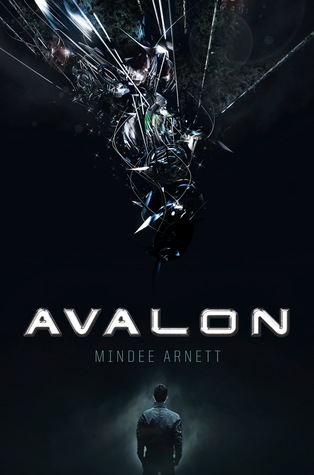
That hope is called Avalon by Mindee Arnett, and for the first time in years I actually want to buy the book off the shelf.

You heard me. No waiting for it at the library, no borrowing it from a friend, I wanna read this sucker. Just look at this beautiful cover.

Do you not just immediately want to read that? It's everything I like - star ships, galactic confederacies, teen rebels, male protagonists, did I mention star ships? It sounds like dystopian Star Trek and the main character's name is Jeth and if that doesn't make you want to read this thing I don't know what to tell you. Jeth comandeers a star ship with a band of teen rebels who all just want to be left alone by the Confederacy, and the story pushes his limits on how far he'll go for freedom. Oooh.

So that's my little spiel for Monday, which I have created a new blog post day - Maniacal Mondays, which will end up being sort of my personal blog day that will relate to something in my life that I'll then gush about (or rant about) to you guys.

Do any of you have a special place that makes you go nuts? Any books you're excited to read? Share! I'm going on Spring Break soon and those plane rides beg for reading material.

Trying to make Mondays a little brighter,
Brie

Thursday, March 6, 2014

My Thoughts Thursday: The P Word

It's been quite the week. Generally I have some sort of post for Thursday where I'm serving up literary snark, but I'm too tired even for that. Sometimes, life rolls on. Other times, life steamrolls on. Over you. This is one of those other times.

A lot of people think that after Christmas break, life's a breeze. But since these people have left school, various school boards, states, and federal whims have brought us more testing, more homework, more diagnostics, and other behavioral corrections enough to make a lab rat out of me. I am nothing but five letters meant to make the school board look good, it seems.

The good news is, the weekend is almost here, and the week of OGTs is next, meaning I have two hours off school each day while the sophomores take graduation tests. I think...I THINK that I can finish The Artist next week.

Fingers crossed, writing gods appeased, lucky shirt worn.

So I guess my thoughts this Thursday are summed up on one word: Persistence. Perseverance can work, but you need tenacity, endurance. Push through, and you'll get what you want. Let's hope we all accomplish that soon, huh?

Don't forget the brain bucket,
Brie

Tuesday, March 4, 2014

Think Tank Tuesday: Commercialism

"I lit up like a Christmas tree, Hazel Grace."

"Real or not real?"

"Always."

"May the odds be ever in your favor."

"And in that moment, I swear we are infinite."

I'm guessing you can probably tell me which book these quotes belong to, who said them, and why. And you would probably be right about all of them. They're on t shirts, fanmade goodies, and every gifset and photo collage of that book or its movie adaptation on tumblr. But what about these quotes make them special? 

The answer: Their commercial value. 

These phrases aren't just any old string of words strapped together. They are great one-liners for t-shirts, good quotes to spout as you hug that beloved book to your chest. They're enormous money makers. Publishing houses love them, movie producers want them, and authors provide them.

Or...they try to.

You can see it especially in YA writing where an author is trying - really, really trying - to make that magical phrase happen. They repeat it. They try to put some sort of infinite wisdom in there, pack it with meaning. But it just doesn't work. As much as authors will tell you they write to tell a story,  the reality is that we're also trying to make money. Sure, we clearly aren't as money-hungry as other professions (if you're in it for money, writing is not for you.), but we gotta eat. So appealing to the commercial aspect of books should play a role. But that role has started to cause a deterioration of the writing it sells. How many times have you been reading a book you love, and suddenly there's a plot twist, ooh! And it's a complete sellout, clearly meant to propel the love triangle. Or a character says something ridiculously out of character for the sake of a quotable piece on their Goodreads page. It's like someone had taken a hatchet to their manuscript and filled in the slits with little commercialized bits to catch a publisher's eye. 

Do we need to acknowledge the necessity of a commercially valid piece? Yes. But we can't let it destroy our ideas and hold them captive. A good piece of literature should stand alone, be able to be good outside the industry. You're putting your name on this, don't you want it to be good?

So for the writers: keep doing what you're doing. Write. Revise. Edit. Query. Fight for your story, and don't sacrifice it for commercial success.

For the readers: venture outside the newcomer shelves. Look on Goodreads, ask an associate of Barnes and Noble, take charge of what you read. Read something. If you love it, tell others. I've said it before and I'll say it again: you're the consumer. You hold the power. Take it.

Viva la Revolución,
Brie

Thursday, February 27, 2014

My Thoughts Thursday: Neuroses.

I said it Tuesday, I'll say it again: I love it when writing is like real life. There's awkwardness, people speak like they normally do, there are people of different races, ethnicities, and cultures, sexualities. The world is a beautiful, complex, random cosmos inside our enormous universe.

Characters are my babies. I love them. They're one of my favorite portions of a book or a piece of literature besides writer's craft. How else do you get another person's thoughts, feelings, dreams, and ideas into your head? You never see someone else's perspectives like you do when you read a book. You go through life with really only your perspective of the way the world turns, hearing about others' but not really living them. This is one of the reasons that books have endured for centuries, they do things for us that nothing else can.

But back to characters.

Giving characters 'quirks' is always a goal for a writer, because that makes them stand out. There are literally millions of characters who have brown hair, blue eyes, pale skin, or who are strong or smart or a jock with a soft side or a badass with a sad backstory. How are these characters to ever find a way to stand out from the others? By their own little neuroses, that's how. Maybe a love interest hates being cliche and always shows affection in the strangest ways possible so as to be 'original', or one always night showers or walks in the early morning outside to be by themselves. It's the little tidbits that aren't relevant to the plot that make them breathe.

Finding out things about a character depend on how you meet your characters. For me, it's almost like I run into them on the street as I'm out doing whatever I'm doing, where they look a certain way, speak a certain way, and have a name before they introduce me. I'm not scrambling to build them like in a Sims game, like some authors. They come as they already are, and so for me finding their little quirks is about getting to know them. Some authors need to carefully plot out each hair on their protagonist's head, but that's not me. We're a varied breed, writers.

The problem with these quirks are the balance of them. Too much, and your character is suddenly a manic pixie dream girl (or boy) that seems to not be able to hold a conversation or live conventionally due to his or her neuroses. Too little, and they appear contrived, deliberate, pretentious...like they're trying too hard to seem normal. Let their humor sneak into dialogue for the sake of them speaking, have someone trip up their need to color-code their closet and see what happens. Not every piece of a character is relevant to propelling the plot forward. Not every detail of our lives comes into play significantly. If it were true, we wouldn't be characters or people: we'd be puppets, doing what entertains our puppet master and disregarding free will. Which I'd hate for that to happen.

I'll keep this brief, because my last couple were super long. But moral of the story, characters are fictional humans (or whatever they're meant to be). We can make them as perfect and neat as we'd like, but they're boring that way. Give a girl frizzy hair. Give a guy an inability to mismatch his socks. Make them laugh, cry, smile, crack jokes because they are people and need air and want to be known. Let them come alive, and readers will go nuts. And maybe, just maybe, you can bring us one step closer to the world on the page.

Meet-and-greets and tea parties with fictional characters,
Brie

Tuesday, February 25, 2014

Think Tank Tuesday: Relationships

If you can't smell it in the air, you can hear the legions coming. Ah, the scent of amour. They see each other. There is this instant attraction. They try to hide it. Oh, so flirtatious. Then BAM. Romance. Hopefully you read that in a really cheesy, bad French accent a la Genie from Aladdin.

But I'm serious, relationships in literature are great. Some of them make us go:


 Others make us go:


 Some of my favorites are more like:


And then there's always that one ship that's your NOTP and it just turns you into a pirate.


A good portion of readers, especially in the YA genre, read for the relationships. If you can't tell, ask anyone about The Hunger Games. Most of them will tell you, "I'm on Team Peeta", "I'm Team Gale", and then the original 'teams' of twenty-first century young adult literature, "Team Edward", "Team Jacob", "Team Guy-Who-Hit-Bella-With-His-Car" (Catchy, eh?) There's the coveted OTP, the relationship you want to be more than any other relationship, ever. The guilty pleasure relationships. Ahh, I'm getting all warm and fuzzy just thinking about them.

But wait, you think. It's Think Tank Tuesday, she'll have something to say about this!

Ding ding ding, winner, my friend! 
As great as YA relationships are, has anyone besides me noticed that they kind of take a similar route in most books? I referenced it at the beginning: Boy meets girl. Both avoid each other or otherwise attempt to hide initial attraction. Some event brings them together. FEELINGS. Awkward not-friends-but-not-together phase, then BIG KISS. Then relationship, ahh. Some end there, some go on to test the couple's relationship by adding love triangles, in which case it's the same formula with two boys at one time, where one kisses the girl before the other and somehow that 'wins' the girl for them.

Can we please freshen up the romance we've got going here? I'm tired of taking a look at a book and thinking, 'oh, this boy is strong and handsome and tall. He's totally going to get the girl over that scrawny, nerdy guy'. Most of the time (in my experience) the girl goes with the new guy come to town over her old asshole boyfriend, takes the new hottie over her best friend since FOREVER, or automatically gravitates towards the hottest guy in the room, who just happens to have a thing for 'average' girls like her.

Where are the best friend couples? What about the ones who met while one was chasing someone else and decided they liked each other better? Do I see the idiot couples who are completely stupid around each other but love each other anyway? Or the ones who fight but come back at the end of the day because no one will put up with them like they will (and love it)? Come on, now.

I'm all about literature that parallels life, and I don't know about you, but I don't see hunky, muscular guys as far as the eye can see stopping to check out the nice girl reading a book across the street. That would've made life so much easier for me. People are attracted to all kinds of traits in other people - kindness, intelligence, physical appearance (which is generally what a person sees first), etc. Now, I know that these successful books have to be commercial, so pandering to the heterosexual female audience with a 'hot' character makes sense, but who defines attractiveness? I'm all for rippling pectoral muscles, but I prefer a guy who is a good hugger. Personally, I'm very physically affectionate. Not everyone is, but why are all the characters super-stoic and good-looking? Where are the snugglers? The ones who make you laugh by making a fool of themselves? The ones who find something in your favorite color and gets it for you because it made them think of you?

I'm not telling you who to ship, or that your favorite male character's amazing six-pack isn't necessary, but...I'm just saying we need more Peetas and Erics (Twilight), more guys who aren't 'conventionally attractive' or super-masculine, who are more like...real guys. Jokers. Nerdlets. Jocks with such tight friends it's like a seven-way bromance. Gimme a heavy dose of male reality, YA industry. You're just killing me with the perfection.

May your ships always sail,
Brie


Thursday, February 13, 2014

My Thoughts Thursday: New Writers

Starting out on the road to being a writer is kind of like high school: you go through awkward phases, you're embarrassed about the things you did a year, two years, or three years ago, and you try to avoid anyone in that dreaded 'freshman' area. For those of us who have been exposed to the writing life for long enough to consider ourselves upperclassmen, a lot of us shirk and downright abuse those freshmen, the 'new writers'.


I myself have never been one for cutting down a tree because it hasn't grown yet. In the words of one of my favorite Disney princesses, 'How high does the sycamore grow? If you cut it down, then you'll never know.' (Pocahontas, if you were wondering).

What people seem to neglect to tell you about writing, whether it's prose, poetry, or editorial, is that you're going to majorly, majorly suck at first. All new writers do. There's none of this 'hit the ground running' shtick that can happen in academia or athletics due to talent. You may have all the talent in the world. You will still suck when you start, it's just the way it is. J.K. Rowling sucked, Steven King sucked, Shakespeare sucked, everyone was atrocious at one point. But what separates that 'suck pit' from the road to awesomeness in whatever your medium is is what tells you that you suck: your instinct. You already have great taste in your genre, but when you look at your stuff, it's just not great. And that's how it'll be for a little, but that instinct is what will pull you through.

So as much as new writers have to learn about craft, grammar, and worldbuilding, I think us veterans have something to learn from the frosh of the writing world. In a list, complete with appropriate gifs: 
Five Things Experienced Writers Can Learn From Newbies.

1. You wrote because you wanted to.


Sure, the whole dream of being published, amassing a militant fandom and taking over the film industry with your epic writing of unbearable awesome sounds great. It does. But no one writes for that. That dream isn't realistic enough for anyone to write for the sake of the fame. (Did I say fame? What fame? Writers don't get fame.) Whenever someone writes, they pick up their pencil, laptop, or whatever mode of writing because they want to tell a story, and they want to share something with others. Poets don't open their ribcages to let the bad things pour onto the page in beautiful lines because they want prestige. But the thing about young writers is that they don't know anything else. They want to write badly. They want to be good, great, super awesome, and a lot of us vets sometimes lose sight of why we even started this blasted business in the first place. I know I sure have. Whether you do it because you can't live without it or just need a way to express your thoughts, new writers remind us that we're all here because at one point, we wanted to be. Thanks, newbs.

2. Enthusiasm writes better than derision.


Truer words have never been spoken. As someone who's been seriously writing for three years now (and writing for ten) I will be the first to tell you that there are days where you look at your work and you just think, 'no'. You don't want to work on it, you don't want to look at it, you don't want it to be there. But you do it because you need it done. And then when you go back, you hate what you wrote. New writers haven't hit that wall yet, they're like toddlers on caffeine. They run with their ideas and write everything they can about it because they want that idea to be real and they want their story read. And if they don't want to write that day? They don't, plain and simple. They're not feeling it. We could definitely take a page from them and get back in touch with our inner crazy writers.

3. There's no such thing as dignity.


I love that chicken. But it's true, and something that people who have been writing for awhile need to get through their (at times) thick heads: we're all in this together. Asking for editing help, using people as soundboards, querying shamelessly, promoting yourself like a street walker on saint's day, whatever. We're all just trying to get our foot in the door, trying to stand out, trying to reach that dream of seeing your idea in real hardcover. Ask for help, take criticism, look at your work honestly. New writers are unabashed when it comes to asking questions. They want to know everything there is to know about anything there is about writing. As a veteran, you like knowing, and looking like you know. But we all know that isn't all true, huh?

4. You're never too veteran to make a mistake.


Ah, internet, you never fail to amaze me with your gif arsenal. But this one is especially important for veterans. Like I said, we all like thinking we know all there is to know about the industry, about craft, about writing, and about being writers. But we don't grow in our work if we don't make mistakes, and new writers are famous for unapologetically making mistakes. They fall, get up, brush themselves off, and run right back in to play. Like my man Callan McAuliffe here, they're taking that backward somersault like a champ. Vets get creaky and refuse to believe they're in the dirt, but they are. Come on, guys, we gotta let ourselves screw up. It's how life works, and taking it gracefully makes it all the easier to get back up.

5. There is hope.


Keep in mind that these new writers are the next generation of authors. Whether they all stay or not is up to them, but as veterans we have to have a good group to hand the reins off to when we all get too old and crusty to write anymore. It's like planting a tree. You won't sit under it, but your child might. Help out the newbies, give them a path to walk that will get them where they want to be, and just let them feel like a part of the group. We all know how the writing world is kind of outcast as it is, don't make it worse and cast out the outcasts from the bigger group of weirdos. I was a newbie once, we all were. If I hadn't had an older writer to grab me by the wrist and (somewhat aggressively) demand that I at least step on this path, I wouldn't be blogging, writing a trilogy, or really doing much of anything with my life. So I have her to thank for that, and it's my responsibility to do that with others, too.

And a final word to any new writers I may be reaching:

Gif frenzy and bold overload,
Brie

Tuesday, February 11, 2014

Think Tank Tuesday: The Dark Side

So I promised that I would start updating the blog more, and hopefully I'll be able to pull through on that by naming days and deciding what I'll do on each. Lo and behold, Think Tank Tuesday. If you think that's great, you should see the other ones I have planned, ahaha.

Oh, and NOTE before I go onto my TTT:

I'm now part of a collaborative blog called Inked, and I'll be posting on there, as well! So head on over there and follow to hear not only from me but from all my other fine writerly ladies who I'm pleased to call friends. Together we can slowly take over the blogosphere one post at a time ;)


Back to TTT.

Think Tank Tuesday (noun) - Tuesday blog posts that refer to writing craft, character development, and the other nitty-gritty wonder-bits of writing that so many people seem to overlook.

Not to be confused with My Thoughts Thursday.

We're talking about the Dark Side today. And not just any old Luke Skywalker 'use the force' dark side. Characters' dark sides - much more interesting. To put it another way, Carl Jung said that "Where love rules, there is no will to power; and where power predominates, there love is lacking. The one is the shadow of the other." This shadow, which is another term for a character's dark side, is what makes characters so awesome.

Because when they've got shadows, they're just like us. No one can relate to someone who is never selfish or rude or angry or vengeful. Even the kindest and most angelic of us have little shards of dark in our souls. This darkness is what intrigues us about other people, and about characters, too. What a person, fictional or not, does with this darkness tells about them.

Lemme break it down for you.


Let's just build ourselves a nice character. We'll name him Dan. Hi Dan. You're looking swell today. Dan is kind, relatively intelligent, generous, likes long walks on the beach, dipping his toes in the sand, and poking dead things with a stick.

My guess is, you probably got to 'generous' and stopped because you saw that I was just rattling on good traits about him until the end. I tried to get you with the stick thing. But that's not bad. Better to know it's dead than be unpleasantly surprised. But you got bored, right? Dan is no fun just being a good guy. That's why Superman isn't as popular as Batman or Spiderman, because Superman is an all-over do-gooder who really doesn't have many flaws. But Batman is about as close to his shadow as he can get while still being considered a 'good guy', and Spiderman...well he battles his demons, too.

Let's get a little creative with Dan. Good-looking guy, an accountant, brings home bacon for his lovely wife and adorable little two-year-old son Ned. (Why Ned? Why not Ned. Let him make his choices.) But what we neglect to share with the lovely lady and their bouncing offspring is that Ned isn't necessarily always accounting for some good people. He's had a few mafiosos come in, ordering him to clean their money. Dan wasn't into it, but after some well-placed threats regarding his new family, he does as he says. More interesting, right? And that's just the gateway. Before he knows it, Dan's busting kneecaps, has mafia bosses on his speed dial, and can get anywhere in the city without so much as a nod to the right guy. Dan has become someone we're curious about now, right? But how did a well-meaning, moral man end up in the mafia? His dark side. Dan wants to protect his family, and will go to questionable lengths to get it. His dark side is his ability to shirk morals, his 'the ends justify the means' mentality. Keep in mind that this is basic and generally a character's dark side is a bit more involved than that.

Let's try a character we're all familiar with at this point. Hmmm....Katniss. Katniss Everdeen, Girl on Fire. Her dark side is gorgeous. Don't mind me, crazy characterizing nut here. But we see the good in Katniss as we follow her through the books - courageous, protective, logical, intelligent, resilient, survivalist. But she's also got herself a smattering of bad traits - cruel, suspicious, manipulative, quick-tempered, cunning. She is willing to use the parts we consider 'bad' to supplement her goals towards her good parts, even though she admits that she's not a good person. (That's debatable. We'll talk.) But why she makes for such a relatable character is that she's selfish sometimes, she says things she shouldn't that set her back from her goals, she fights, she loses, she gets up and she essentially gives the Capitol the finger and says 'You've taken everything from me, you can't stop me anymore.' Her ability to kill without a second glance is capitalized on.

And then there's her sister. Darling little Primrose Everdeen. Even though you probably should know what happens by now, if not to at least prepare yourself for J. Law's rendition of her in Mockingjay Parts 1 & 2, we can definitely say that Katniss gives all for her sister's safety, to keep protecting her and allowing her to have the childhood and freedom that Katniss didn't get. To (futilely) keep Prim from developing a dark side. But Katniss has no problem using all of her 'dark' traits that she's generally ashamed of in order to help Prim, Peeta, or anyone else she loves. She's not always kind and polite and good-natured. Sometimes, she's downright villainous.

Characters need that, as much as you may hate to make them anything other than perfect or ridiculously evil. Everyone is a mixture of light and dark - in different proportions, obviously, but it's still true. Katniss is loving but cruel. Gale is righteous but dogmatic. Peeta is a persuasive speaker but angers easily.

So I'll wrap this up before this gets too long, but this is what characters need. In the immortal words of Kelly Clarkson, "Everybody's got a dark side/Do you love me, can you love mine?" (answer: Yes. Especially if you have cookies.) People are capable of beautiful and terrible things. Light and dark. Love and cruelty, rebuilding and destruction. Characters that stick with people do that, too. 

Got something to say?
Tell me what you think about my first TTT. Too long, not long enough, have a subject you'd like me to talk about? Hit the comments below.

Complexes and neuroses,
Brie

Tuesday, January 28, 2014

Am I Missing Something?

Hello, everyone. The temperature here is currently under twelve below zero and ten minutes outside can give you frostbite if you aren't careful. Welcome to Ohio, your new destination for the Artic Circle.

Looking back at my weeks apart from you guys, it got me thinking: why don't characters ever talk about this stuff? Not necessarily even weather (Although that's definitely something to look at) but how most things in life we consider normal, they lack. Choosing a shirt in the morning. Having an inexplicable sudden urge to pee. Even having idle conversation with strangers.  Characters in literature (especially YA) seem to be missing out on these parts of life. My little talk today is why I think that's bogus.

First off, adding these aspects to a piece makes it seem more realistic, grittier. Not including these things puts up a sort of pretenseful barrier between the reader and the character. That character doesn't accidentally push open doors to find someone on the other side. It's too mundane, right?  Of course it is, and that's why we need it in there. Dystopias have real trouble with this. Katniss and Tris never have people push by them,  or trip on something, or even brush crumbs off their faces. Taking out these subtleties makes their movements appear more regal, more predetermined. They seem somehow superior to the average teenage girl. And when books are trying to connect with their readers, that barrier can't be there. I sure as heck don't walk around with light feet and graceful movements. Why should every YA protagonist?

Why don't authors do this, you ask? I'm not quite sure. Part of it is certainly that we've been drilled into writing where everything has significance, and to leave the extra stuff out. The "if you put a gun on the wall, it has to go off before the story ends" mantra. And while this is a good rule, more writers need to realize we're pirates. Our 'rules' are more like guidelines, anyway. Slipping in random happenstance meetings, waking up with your hair a total mess and having your brush get stuck in it, heck, changing your wardrobe.

You would not believe the amount of characters I see who change their clothes all of twice or three times in the book. That's gross, get a washer. Ya nasty. Or we could talk about eating. A lot of characters apparently don't eat very much, if at all because they're constantly refusing food or not talking about eating at all, even though there's food aplenty and starvation is not an element of the story. Honey, you gotta eat. Go get yourself a bagel or something.

Especially for female characters. Do you guys have a medical condition? Cause months go by in stories and I have yet to see any piece of literature where a female protagonist gets her time of the month. It's not even mentioned. There's talk about male bodily occurrences (especially when it's sexual occurrences) all the time,  but apparently periods aren't worth mentioning, even when troubles with a person's cycle can be very indicative of their health, mindset,  and, obviously, their state of pregnancy. In Twilight, the term wasn't even mentioned. Meyer just slid past the whole thing by having Bella pull out tampons. Seriously? Females are not these mystical creatures that no one understands. Anyone over the age of twelve knows what that is.

Not everything in a story needs to be necessary. That's one of the things many Percy Jackson fans love (including me) about the characters of Percy Jackson and the Olympians and the teen-focused Heroes of Olympus. The characters all have aspects of their personality, of thoughts and dialogue, that aren't strictly necessary to forwarding the plot. Why do we like them so much? It makes the characters more real. You learn more about a person in how they handle a bad hair day than you do watching them fight monsters. It fuels fandoms, as well, knowing a character's favorite foods and colors and about the back story of the person even if it isn't relevant to the plot.

At the end of it all, it's ultimately the author's decision. If they want a character that stands behind a barrier from the reader, that's their choice. I find it a dumb choice, but there's nothing I can do about it. As much as literature strives to be regal and memorable and elite, we forget that there is perfection in the mundane things in life and beauty in the average occurrences of day-to-day living. Go about your lives, my friends, and see that the little things you take for granted are what make it real. Shouldn't we have that in our books, too?

Inexplicable finger cuts and bad hair days,
Brie